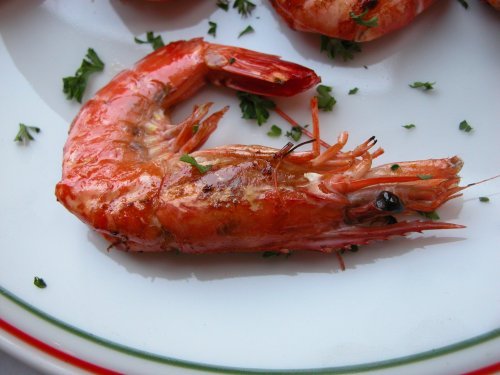
“I could never eat shrimps with heads”

[2/5/10]

Shrimp_gamba_nature_279947_l

(photo from imageafter)


I learned recently that my friends aren’t really down with the idea of eating shrimp still attached with their heads. Well, I know it’s never fun to look into the eyes of a dead thing while you’re munching on it, but I felt I received an over-reaction at my comment that I don’t eating shrimp whole.


Yes, this is the girl whose favorite food as a child was fish eyes, but give me a chance here.

The problem is that everything is so processed where I live now that people can’t attach middle to beginning. I’m calling it disconnection to source.


I’m used to eating as in a lot of people sitting at a circular table participating in a very active event. If I may, I will use my grandfather as an example. The majority of what my grandfather eats on a daily basis involves an additional process before it’s gulped down. That means peeling, cracking – you name it – parts of the food to eat it.


I lived like that too at one point. I’m positive my one-year-old self was better at spitting out fish bones than I am now. But it was because I had a need to do it. Nothing was done for me.


We all know how the story goes here. Everything – everything – is de-boned, de-scaled, be-headed and de-gutted. So perhaps my issue with this disassociation to where things come from is just cultural. Is it?


For me, it’s not about the shrimp. It’s that we forget where things come from and we forget where things go. It’s like seeing only yellow-green instead of the entire spectrum. How many of us take food that’s handed to us and swallow it all at once, not cherishing it or thinking about how difficult and how long the process was of obtaining it in the first place. How many people are aware that half the foods they eat during spring are out of season?


When I was little, I was told that I couldn’t waste a single grain of rice on my dinner bowl, because rice farmers had spent all day every day toiling in the sun to produce it for me. Someone else had to suffer so I could have something precious.

Sure, much of what I eat now is grown by farmers using efficient machines, but for many places on the planet, my old philosophy still holds. Understanding the most vital ingredient for sustaining life still matters.


I still love my friends. They can hate eating shrimp with their attached heads. I’ll carry on eating my seaweed, octopus and eel.

 

These Boots Are Made For Walkin’

[9/7/09]

Dsc09102

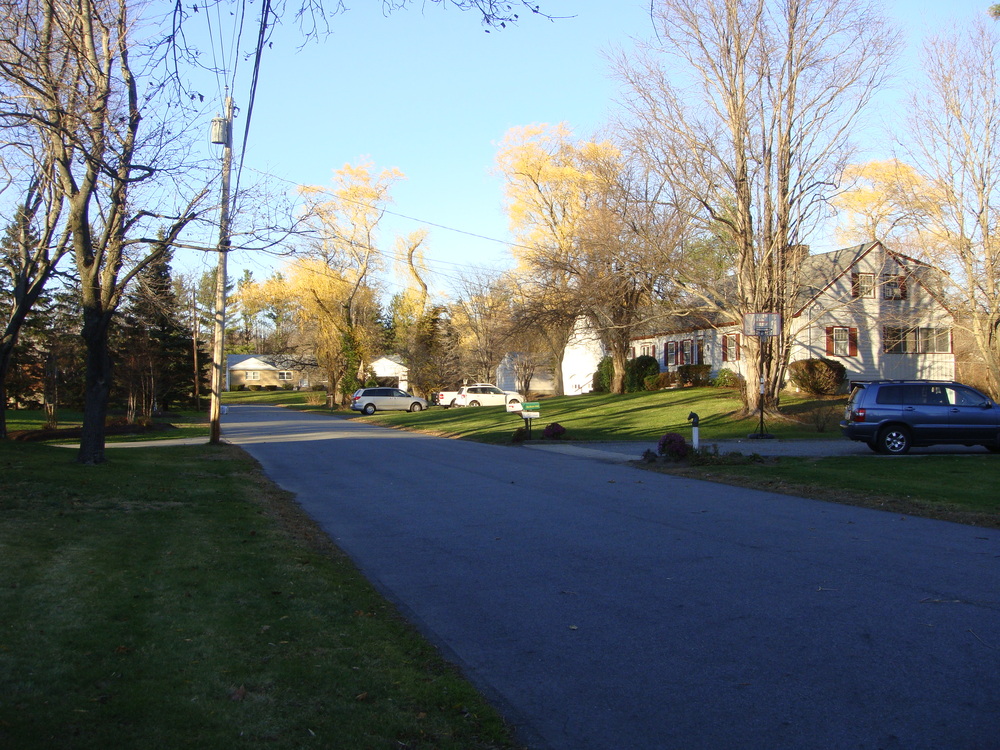
My friend from England visited me in middle of nowhere, suburbia, MA recently and was astonished at how everything was “bigger” in America. That’s no surprise to anyone who has stepped out of his or her doors for a learning experience or two elsewhere. Everything is indeed bigger. The cars are bigger, the people are bigger, the houses and yards and bigger and the servings at restaurants are bigger.

But like everything there are exceptions to this rule. The sidewalks/pavements are smaller, or in many cases nonexistent. When I moved to the U.S. ten years ago, I experienced the same kind of confusion at why there are more people but fewer walking paths. It didn’t take me long to figure out it was because you couldn’t actually walk anywhere within a reasonable time frame. Of course, it still bothered that I was used to using sidewalks as the means to get places.

The 8-year-old me adapted quickly enough and accepted that walking was crossed off the list in favor of personal cars. I do think cars are wonderful in all sorts of ways. They are incredibly useful when you need to get somewhere – fast. It plays a key part in building our notion of how quickly life should move. Say I want to go to the supermarket, but I want to soak up the sun at the same time and get my exercise too. What happens is I realize how incredibly dangerous is it for me to make this trip, and I stop there.

Yesterday, my family took my friend into Boston where there are sidewalks. As we drove along the Charles River, we watched the people on the path beside us. There were joggers, more joggers, some bikers, a skateboarder and more joggers. No one was walking. OK, there were probably a few people here and there that were legitimately strolling, but I promise the majority of those people were not.

I don’t think everyone is uptight and rushed, but everything in our media and in our communities point to this. How many times have you seen a cell phone commercial that boasts how you’ll become the most efficient texting “machine” if you buy the phone or a service that “connects you faster than ever” to so and so? I’m betting probably a fair number of times. 

But we have the highest GDP in the world, don’t we? We work and live faster, because we grow faster? So let me ask you: Does this fact make you happier?

I challenge whoever is reading this to spend a day walking to their friend’s house or to the closest store. When you reach your destination, I hope that you will feel immensely satisfied by having made that walk. And I hope you’ll also feel some kind of achievement in it, because you put in effort to get there. I think it’s time to give a go. What do you think?

Oh hey!

Dscn7985

Hi there! This is my first post on posterous. It’s unalarming, unthrilling and relatively plain. But soon, you will travel with me on an enlightening —

wait, no. Hm…this is harder than it looks. Maybe something more witty will strike me tomorrow.