
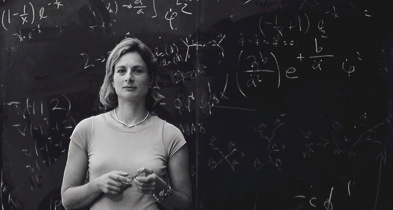
Image by Steve Snodgrass
A couple of months ago, I heard Kipp Bradford talk about racism within the science field at TEDxProvidence. He spoke about how he grew to love science from an early age, how his teachers actually discouraged him from taking the science route as an African American child and the lessons he learned from this experience.
The truth it that it’s not simple, because there are few role models in the science field that African American children can look up to. Bradford mentioned that black football players are often portrayed as warriors on TV while black scientists are represented by …Steve Urkel (remember him?). Everyone wants to be the popular athlethe, not the geeky nerd. That is the stereotype that’s constantly being reinforced throughout the media.
When I went back to my elementary school yearbook, I counted how many kids said they wanted to be professional athletes vs scientists or engineers when they grew up. The ratio was 3:1. Despite all the math and science classes my elementary school actually offered, sports won.
I thought about this some more and well…it made a lot more sense than I thought. Sports can provide you with concrete goals, something to reach for whether it is a championship or best time. A win can grant you with an immediate happiness. If you are the best of the best, you get fame and money. The same cannot be said for a lot of jobs people hold as adults, even though those jobs may be of greater value to society as a whole.
But it doesn’t mean that we can’t show kids how important those jobs are to everyone. We need more role models, the type of role models Kipp Bradford had as a kid (astronauts, physicists), because they can show us what we can be.
The reason why people don’t think of themselves as a teacher, doctor or scientist is because no one like them has done it before. It’s so important for people to realize this. It’s why Obama’s presidency means so much to the African American community. It’s why Jeremy Lin means so much to us Asians. It’s why Lisa Randall, the first tenured female theoretical physicist at Havard and MIT, is so important.
We need people to continue to create paths that don’t exist yet, not just for themselves, but also for the community they represent. That’s how “impossible” becomes “maybe I can.”
 The Design Ocean