[12/13/10]
[section of a paper for class]
Swaying the masses through a variety of mediums has always been one of art’s most potent qualities. While there are numerous technical fixes to a problem such as waste, there are few better fixes than art, which starts from changing individuals from within. Art challenges, questions, persuades and reveals. It is a reflection of our lives, our society and how we think.
There are many artists that have tackled the problem of waste in their work. Some reuse trash to make aesthetically pleasing objects, some paint it and some use it as a tool in their art-making. There are also those who capture waste as a subject matter that we, as individuals, cannot ignore. It is not about portraying waste differently than it is. It is simply about making everyone confront it.
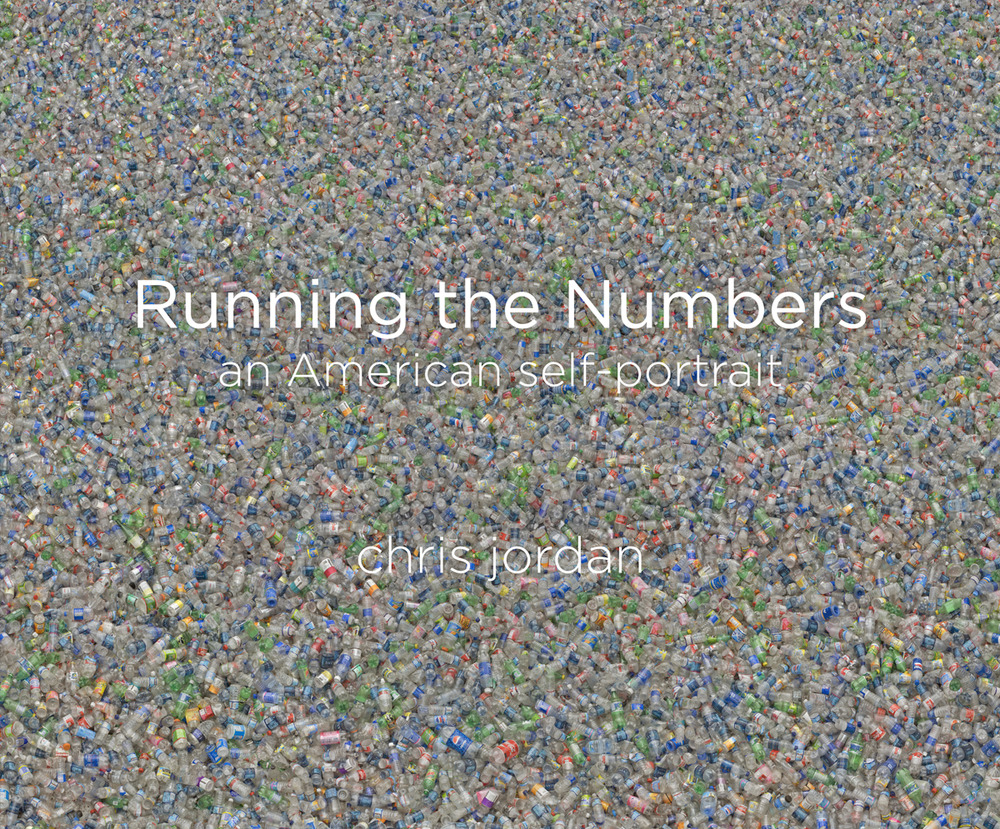
Chris Jordan is one artist who has achieved this with great success. His project entitled “Running the Numbers” is about creating images with products we consume to represent a statistic about waste. For example, Plastic Bottles, 2007 is a large photograph that “depicts two million plastic beverage bottles, the number used in the US every five minutes.”
From far away, two million plastic bottles appears as a textured plane that extends outwards into space. Once the viewer looks closer (or zoom in on the screen), he or she will begin to recognize shapes and be able to read the labels on the shapes. It is then that the viewer realizes this plane is in fact made of plastic bottles and the true meaning of the statistic becomes clear. Chris Bruce, Director of the Museum of Art/ Washington State University describes this reaction clearly: “When the artist showed his work on the mock TV news show The Colbert Report in October 2007, there was a spontaneous gasp from the audience as a slide of the overall view of Cans Seurat shifted to a close-up. I think that gasp came from a palpable sense of seeing oneself in the big picture: We go from observing the overall image to identifying ‘my Pepsi’ or ‘my V8’” (Jordan, 8).
Why is this an effective method of shifting perception? It’s difficult for people to understand the impact of an individual bottle on the environment, yet when faced with two million of them laying next to each other it is impossible to ignore. Many people do not have the chance to see such a sight in person unless they work within the manufacturing of the product. In taking this photograph, Chris Jordan illustrates that “what we each have to expand our consciousness to hold is that the cumulative effect of hundreds of millions of individual consumer decisions is causing the worldwide destruction of our environment” (Jordan, 12). He gives everyone the opportunity to see what the statistic truly means on a visual level.
The image is also effective, because it can be emotional. Wired magazine editor, Daniel Pink, explains, “when facts become so widely available and instantly accessible, each one becomes less valuable. What begins to matter more is the ability to place facts in context and to deliver them with emotional impact” (Jordan, 11). The audience suddenly understands their connection to what they are seeing because they might use that particular product every single day and throw it away without thinking twice. Indeed, the artist states himself, “I think of Running the Numbers as a kind of translation, from the deadening language of statistics into a more universal visual language that might allow for more feeling. The underlying aim is to question our roles and responsibilities as individuals in a society that is increasingly enormous, incomprehensible, and overwhelming” (Jordan, 35).
—————————————————————————————————–
Once “two million” is no longer an abstract number, we’re able to feel it. Once we can examine our own unconscious behaviors, we can act on them; and once we act, we can change.

 The Design Ocean