Reasoning & Physics

Screen Shot 2015-04-28 at 7.47.23 PM

My roommate has recently being watching a lot of Elon Musk interviews. She sent me a section of transcript from the Q&A that followed his TED talk. I’d like to share it, because it’s not often that I find ideas about thinking itself to be so crystal clear.

Watch the TED talk

Question to Elon Musk:

18:46 CA: My theory is that you have an ability to think at a system level of design that pulls together design, technology and business, so if TED was TBD, design, technology and business, into one package, synthesize it in a way that very few people can and — and this is the critical thing — feel so damn confident in that clicked-together package that you take crazy risks. You bet your fortune on it, and you seem to have done that multiple times. I mean, almost no one can do that. Is that — could we have some of that secret sauce? Can we put it into our education system? Can someone learn from you? It is truly amazing what you’ve done.

Musk’s Answer:

19:30 EM: Well, thanks. Thank you. Well, I do think there’s a good framework for thinking. It is physics. You know, the sort of first principles reasoning. Generally I think there are — what I mean by that is, boil things down to their fundamental truths and reason up from there, as opposed to reasoning by analogy. Through most of our life, we get through life by reasoning by analogy, which essentially means copying what other people do with slight variations. And you have to do that. Otherwise, mentally, you wouldn’t be able to get through the day. But when you want to do something new, you have to apply the physics approach. Physics is really figuring out how to discover new things that are counterintuitive, like quantum mechanics. It’s really counterintuitive. So I think that’s an important thing to do, and then also to really pay attention to negative feedback, and solicit it, particularly from friends. This may sound like simple advice, but hardly anyone does that, and it’s incredibly helpful.

“Focus”

Processed with Rookie

Meaghan Nolan, the founder of UX Lab, said to me this week during a General Assembly event something to the effect of: “For my parents’ generation, the mantra in life was to work hard. You got to where you wanted to be by working hard. In our generation, working hard just ensures that you’ll be overwhelmed. We can’t just work hard, we need to focus.”

We all have many opportunities in life. The hard part is knowing which ones to pick. If we work hard and pick them all, how do we fit sleep in our lives? We can’t. We can only pick the opportunities that we feel most strongly about and focus on those.

Her words really resonated with me, because I work hard on all the things I do – whether it’s design related or not. That hard work brings me many interesting opportunities that appear shiny and wonderful. I always want to jump in and be a part of them.

It’s so easy to become distracted. There’s so much noise around us with people telling us how to best grow our careers, what our next moves should be and where we should go. Many people want to do it all. But doing it all comes with a price. It means that you’re getting pulled in more directions and that you won’t be moving as fast as you want in any one particular direction.

If you have somewhere you want to go, you can’t just hustle. You need to make it your focus to get there.

I see to think.

1

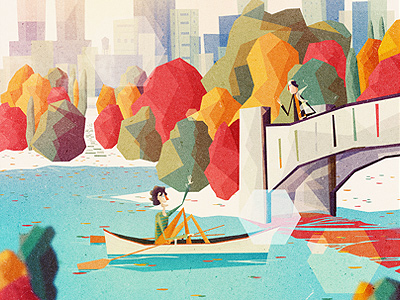
I use images to think. I’m not thinking with words and then using images to describe that thought. Images are how I think.

It means that I “see” something first, then that image turns into a thought. And only then does that thought turn into words.

At school, it meant that word problems in math class were the worst things on the planet. I had to process the written words, translate them into images and then think about solving them.

When the English teacher asked us all a question verbally, I had to translate those words into images, answer it with images and spit it back out in words. This generally took me a minute, so by the time I knew what to say, another student’s hand was already chosen.

At work, it means that when people problem solve things in a long email, I diagram their words afterwards. I feel like I have an extreme case of visual thinking, but I’m sure other artists and designers feel similarly.

Having these experiences has made me more empathetic to people who see the world through numbers or tones. It’s made me realize that miscommunication is more than what was perceived incorrectly through someone else’s lens. It’s also what the lens is.

So next time when someone you’re talking you doesn’t get what you’re saying, it might not be because you didn’t explain it well enough. It might just be that you’re not using the way that person thinks to get to the point.

The Artists I Know

…make things not because someone told us to. We make things because they want to. We have intrinsic motivation to make something that no one else has made before. It means that we’re not listening to what the world wants. We’re listening to ourselves.

Sketching with Posters

I occasionally make posters to get and emotions thoughts out. Since I work at a product company it’s easy to get stuck working on the same types of things all the time, so I thought I’d change it up by taking some of my free time to throw up words up in the air and see where they land. I challenged myself to create each poster in 10 minutes.

Poster 1-01           Poster 2

Poster 3 copy           poster 4 copy

Poster 5 copy           poster 6 copy

poster 7 copy           poster 8 copy

poster 9           poster 10

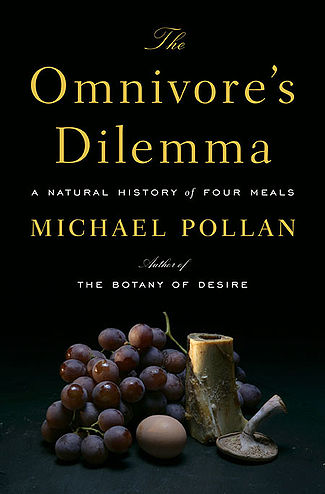
I Read The Omnivore’s Dilemma & It’s Making Me Skeptical of the Food Industry

OmnivoresDilemma_full

Things I learned:

1. Corn is in everything. Ingredients that contain corn derivatives: citric acid, corn fructose, corn syrup, dextrose, lactic acid, MSG, sorbitol and xanthan gum – just to list a few. Many of these derivatives over time on a mass scale cause obesity. Food scientists spend a lot of time trying to add more calories into smaller and smaller amounts of food.

2. “Compared to us, Mexicans today consume a far more varied carbon diet: the animals they eat still eat grass (until recently, Mexicans regarded feeding corn to livestock as a sacrilege); much of their protein comes from legumes; and they still sweeten their beverages with cane sugar.”

3. We actually have so much corn that we don’t know what to do with it. So we have to create new markets just to keep up with the massive supply, which is caused by low prices, high yield and government regulations that make it less desirable to grow other crops like broccoli.

4. Because we have so much corn, we feed it to animals who can’t process it. To combat this issue, we feed them medicine.

5. We also give animals antibiotics, because we crowd them into spaces not meant for living. We eventually consume these animals, thereby potentially compromising our immune systems.

6. We use fossil fuels to create nitrogen fertilizers for corn. We use 10+ calories of petroleum to create 1 calorie of food.

7. “The ninety-nine cent price of a fast-food hamburger simply doesn’t take account of that meal’s true cost–to soil, oil, public health, the public purse, etc., costs which are never charged directly to the consumer but, indirectly and invisibly, to the taxpayer (in the form of subsidies), the health care system (in the form of food-borne illnesses and obesity), and the environment (in the form of pollution), not to mention the welfare of the workers in the feedlot and the slaughterhouse and the welfare of the animals themselves.”

8. There’s such a thing as an industrial organic farm. You’re dealing with farming on a large scale, so there’s give and take (and more use of fossil fuels). The result is still better than conventional farming given the amount of pesticides you’re removing from the food stream.

10. It’s easy to write about farming on a smaller scale and delivering food only to local markets, but what happens if you try to apply this to NYC or any other densely populated urban centers that aren’t surrounded by lush fields?

Art.

IMG_8524

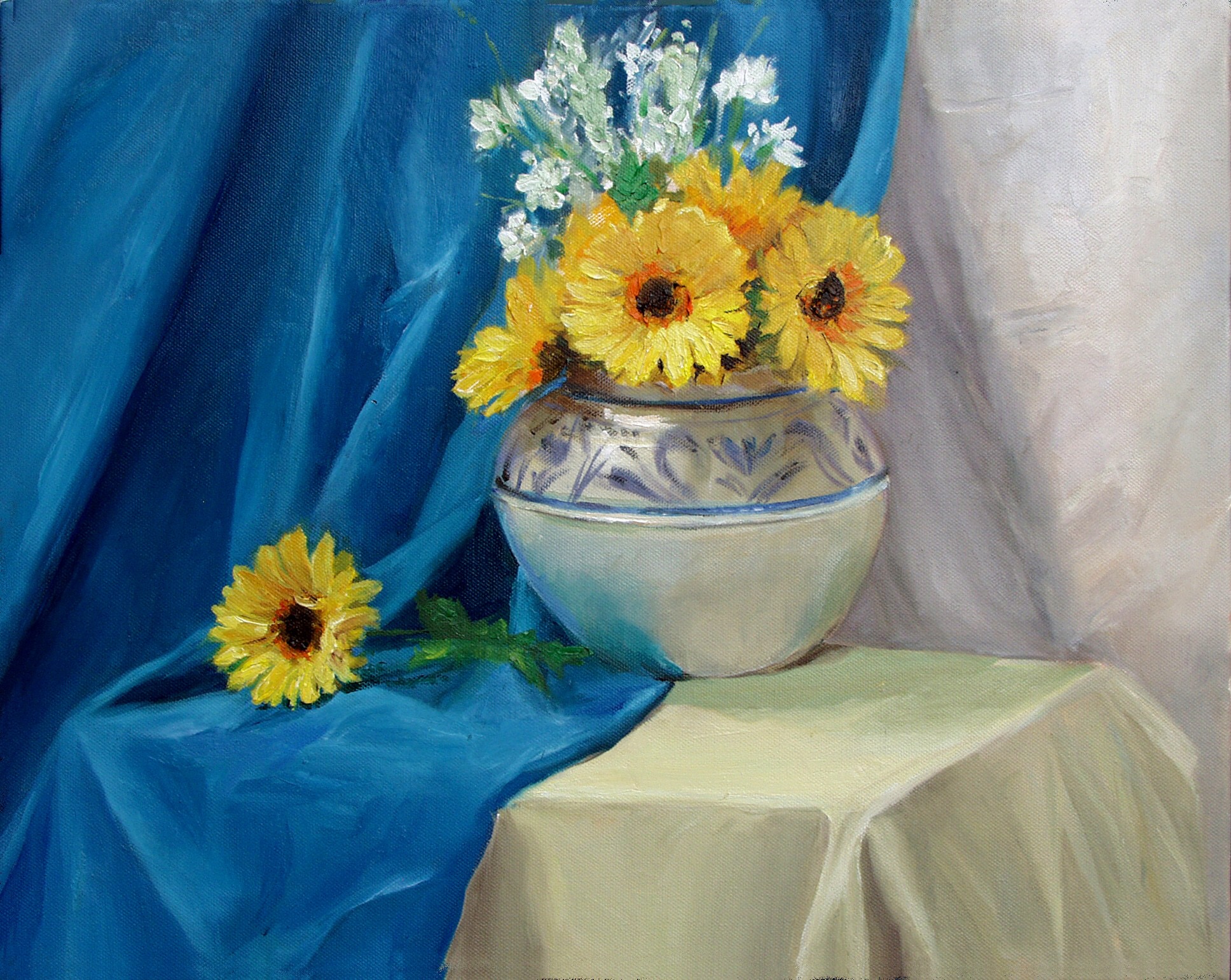
As I flip through an old childhood sketchbook, I see drawings of my old teddy bear, my nightstand and occasionally something that resembles a cartoon monster. I was always an imaginative child, spending hours cooped up into my room writing short stories, creating pretend alphabets and painting. I loved art, because I liked to invent new things.

During high school summer breaks, I took oil painting classes from Professor Niu, a highly-regarded painting teacher in the Chinese community. The classes were hours long and could be physically tiring, but the hardest thing about painting ended up being paying attention to my eyes.

When I tried to paint a vase, my brain told me it was white while my eyes were telling me it was actually blue (from reflections created by nearby objects). I would struggle at first to paint it blue, because I knew it was white. But when I did paint it blue, it looked right and suddenly the painting would come together.

These classes ended up teaching me not just about how to make colors and form come together on a canvas, but also how to be a little braver. Art teaches courage, an attribute that comes from facing fears and overcoming them.

It’s easy to make something the way other people tell me it should be. It’s much harder to block out existing thoughts to create new ones. Art is important for this reason. It tries new things. It experiments. It plays. It imagines. It questions. It ultimately brings people out of their comfort zones; that’s something we always need a little bit more of.