NASA

Dsc01770Dsc09615Dsc01911Dsc09766Dsc02164Dsc09516

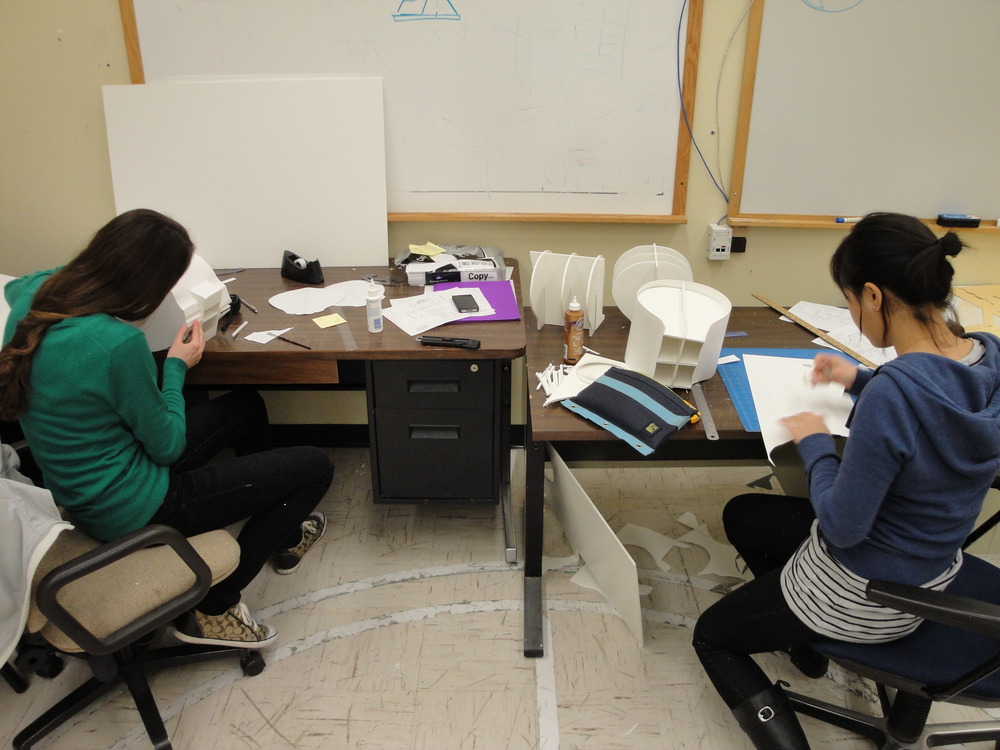
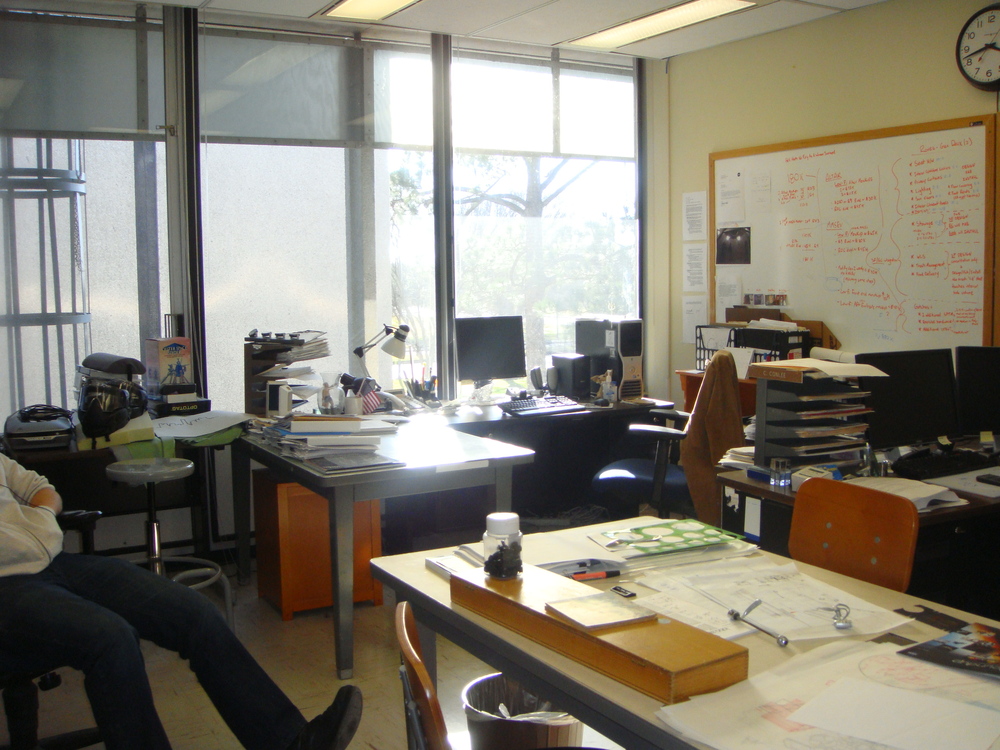
Stephanie DelVecchio and I spent six weeks down at the Johnson Space Center interning for the Habitability Design Center. (I still can’t pronounce “Habitability” without stumbling) We worked with Rich, Chip and Evan to come up with sketches, build models and mock up space-related concepts. I really liked working in the mockup and construction building where Woody lived. Woody’s interior is pictured here. He’s (or She’s) the next generation space exploration vehicle. We got to play some 90s pop in there, snap some photos of tourists snapping photos and imagine astronauts trying to eat in it. When we weren’t here, we were at our little office in a different building when the HDC is located. We spent a lot of time with a pen and paper or an x-acto knife in our hands, occasionally some time with a mouse  and hot glue. It was awesome getting to see Mission Control and Saturn V Rocket too. The best part of this internship, however, was the people. The guys at the HDC, my intern-mates and all the incredibly nice people we met in Clear Lake made this an exciting (and entertaining) experience. I came home with a ton of memories and most importantly, enough inside jokes to last me until I graduate. Cheers!

Designs I like

SixthSense

Your palm is your phone, the wall is your gps and your finger frame your photos. The potential of this technology is enormous. See for yourself. 

Link

_____________________________________________________________________________________

My Litte Piece of Privacy:

The robotic curtain that follows outside passerbyer’s movements. Hilarious.

Link

_____________________________________________________________________________________

Cyclops Watch

Mr

This is the watch for me. It doesn’t tell you the time with hands; instead a hoop passings over different colored circles which represent the hours. By Crispin Jones.

Link

_____________________________________________________________________________________

The DBA Pen

Pen-top

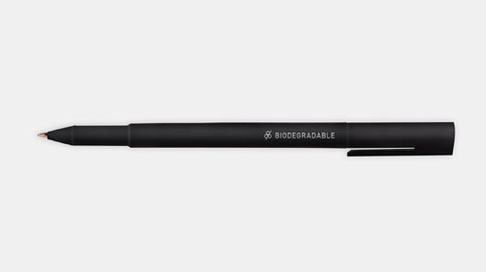
The only 98% biodegradable pen in the world. Made at a wind-powered facility. Link

_____________________________________________________________________________________

Playground House

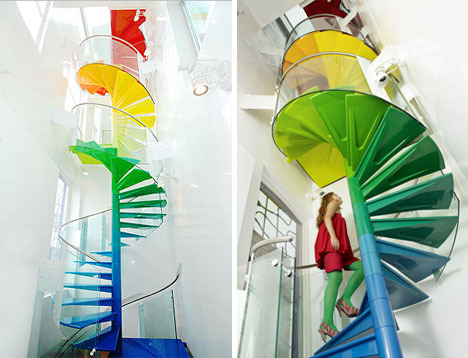
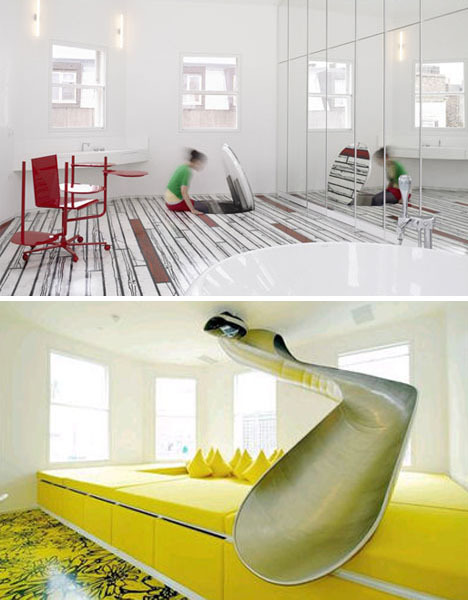
This is basically the house I’ve always wanted as a kid. One that replaces conventional doors with slides and has all sorts of colors running everywhere.

Rainbow-house-spiral-staircaseTrap-door-slide-floor

Link

_____________________________________________________________________________________

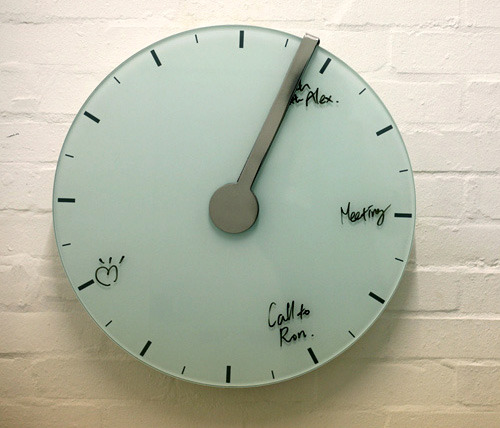
Trace of Time – Erasable Clock

Trace_of_time

Get that task done before the clock erases it!

 Link

_____________________________________________________________________________________

 Tkaro

Tkarolidoff

Transportable and lightweight glass water container with airtight seal.

Link

_____________________________________________________________________________________

Amor de Madre – Barcelona Design

ComebagagainChanneledcuttingboard

Beautiful, intuitive design. Encanal – channeled cutting board + Comebagagain – support for garbage bags

 Link

_____________________________________________________________________________________

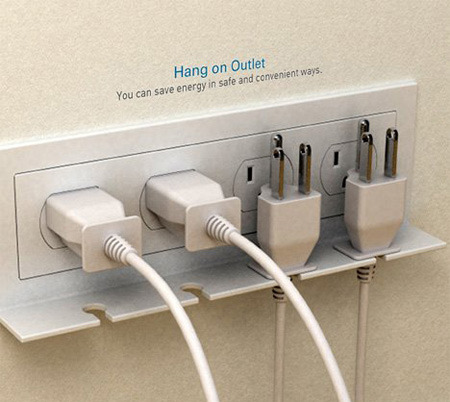
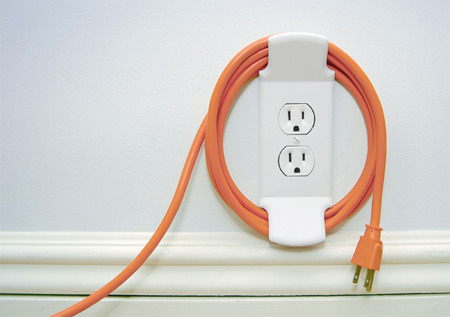
Wall Cleat, Universal Plug and Hang On Outlet

HangonoutletPlugwithholeWallcleatsforplugs

Making life tidier and easier.  

Wall Cleats and Universal Plug and Hang On Outlet

 _____________________________________________________________________________________

Alhzeimer Ad

Belgian_league_of_alhzeimer


Brilliant concept to demonstrate the effect of memory loss. It really takes advantage of the medium to get to the point.

Link

 _____________________________________________________________________________________

Clear Lake, TX

Dsc09451

I wrote about the absence of pedestrians in an entry a while back, focusing on the lack of walking facilities in my neighborhood. Now, I find myself in a very different neighborhood. It does have sidewalks, but who’s walking?

I have been in Greater Houston for nearly month and have seen a total of 27 pedestrians on the road. There is no incentive to walk, because, as most people living in a suburban sprawl community with common sense know, to get anywhere that is anywhere you drive. But my roommate and I walk, because neither of us is old enough to rent a car.

It is an entirely isolating experience to walk in this city, because the only things around you are machines. The air often feels hostile, but mostly just downright awkward. We have been honked at seven times by cars driving by us. I reckon it’s because we stick out a whole lot.

The thing about walking when everyone else is driving is that you don’t see actual bodies or feel the warmth of their Southern hospitality, which is only apparent when you step into a store or a residence. There is a genuine disparity between the people living in the environment and the actual surroundings.

Because we’ve been walking almost daily, we experience seeing a full moon rising on one side of the sky and a bold, red sun setting on the other. We are accustomed to seeing white egrets perched on the trees of Egret Bay every evening to rest. We feel the warm, Southern breeze that we wish for our parents back home where snow piles up our front porch nearly two feet.

Because we’ve been walking, we’ve also been able to experience the community’s stores, restaurants and scenic areas much more intensely than if we drove by them. It means better business for small, independent businesses and more personal connections with the people under its roofs. If you are driving, you can’t wave to the storeowner. You can’t bump into your neighbors and start a conversation. You don’t notice every nook and cranny of your world.

I constantly imagine what this city would look like without the wide roads and the even wider parking lots. Could it be compressed into a much smaller version of what it is so that everything could be within walking distance? Or is the vast expanse of land too tempting for people to stay within confined limits? What if the city actually had a center? What if it was alive?

It’s Not Failure

[12/20/10]

Football_fever_fans_898482_l

(photo by Seeding-Chaos)

All throughout grade school, I was taught that failure was wrong. I distinctly remember how I would cringe at receiving anything below a perfect score in middle school.

So what I was I being good at? Memorizing large quantities of information. In order to pass tests, I would swallow the textbook a few days beforehand and forget it all by the end of the week. Multiple-choice tests trained everyone to scan for the right answer, not problem solve under a pressure situation.

Because I was motivated by what I now perceive to be a hollow letter, I only funneled my energy into spitting out things I was taught to be “right.” I didn’t question anything in particular. Because I didn’t question authority, I often didn’t think for myself and simply recited the knowledge around me verbatim.  

But what was the motivation for all of this? The fear of failure.

I didn’t want to be one of those kids that received punishments by the school, their parents and their peers if they didn’t do well. Yet it’s also embedded in all kinds of life quotes that people have to fail in order to learn.

So I was afraid to try, because trying meant I would most likely (in my mind) fail.

I’ve realized this more and more the longer I’ve been away from home, but I didn’t fully appreciate it until my teacher for a design course this fall told me one day: “You have to fail at least a couple of times before you get it right. I haven’t seen you fail yet.”

It hit me then. It made so much sense. I had been procrastinating on developing the prototype for my group’s concept, because I was afraid it wouldn’t work. But of course it’s not going to work. It never works the first time.

Quite simply, failure is only a concept, a word that people came up to describe something or perhaps someone who hasn’t made it work. That’s all it is. But if something doesn’t work, you try something else, modify the original plan a little and keep trying. It’s not the end of the world.

But because we have this word “failure,” we impress feelings of guilt and shame onto people during situations where things aren’t running smoothly.

When other people tell you that you have failed, you have to realize that it’s not up to them to tell you that; it’s up to you. This culturally-conceived notion of “failure” keeps us from doing our best. It keeps us from taking the risks we need to learn, develop and grow as individuals. We never actually fail until we stop thinking, doing, making…

So instead of saying I’m going to fail a hundred times, I’m making it a personal goal to “try,” “struggle,” and to “aspire” more this year – all of which are more productive than pondering the consequences of failure.


Photographs That Make You Think Twice

[12/13/10]

Chris-jordan-cover-small

[section of a paper for class]

Swaying the masses through a variety of mediums has always been one of art’s most potent qualities. While there are numerous technical fixes to a problem such as waste, there are few better fixes than art, which starts from changing individuals from within. Art challenges, questions, persuades and reveals. It is a reflection of our lives, our society and how we think.

There are many artists that have tackled the problem of waste in their work. Some reuse trash to make aesthetically pleasing objects, some paint it and some use it as a tool in their art-making. There are also those who capture waste as a subject matter that we, as individuals, cannot ignore. It is not about portraying waste differently than it is. It is simply about making everyone confront it.

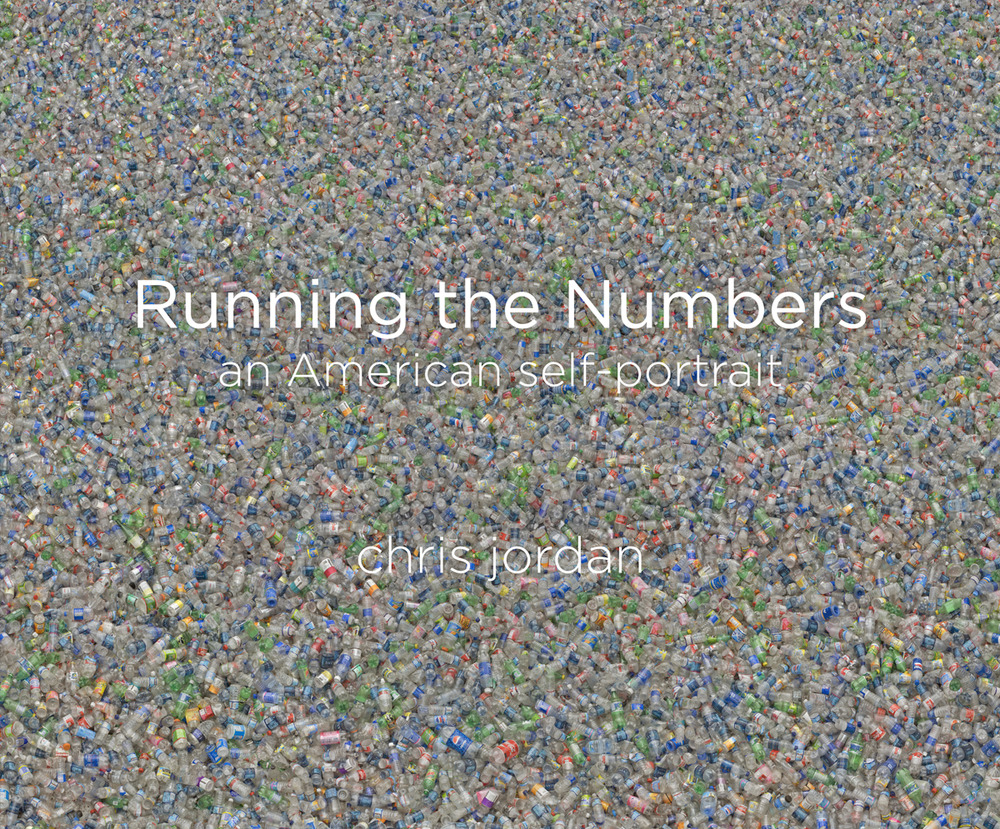
Chris Jordan is one artist who has achieved this with great success. His project entitled “Running the Numbers” is about creating images with products we consume to represent a statistic about waste. For example, Plastic Bottles, 2007 is a large photograph that “depicts two million plastic beverage bottles, the number used in the US every five minutes.” 

From far away, two million plastic bottles appears as a textured plane that extends outwards into space. Once the viewer looks closer (or zoom in on the screen), he or she will begin to recognize shapes and be able to read the labels on the shapes. It is then that the viewer realizes this plane is in fact made of plastic bottles and the true meaning of the statistic becomes clear. Chris Bruce, Director of the Museum of Art/ Washington State University describes this reaction clearly: “When the artist showed his work on the mock TV news show The Colbert Report in October 2007, there was a spontaneous gasp from the audience as a slide of the overall view of Cans Seurat shifted to a close-up. I think that gasp came from a palpable sense of seeing oneself in the big picture: We go from observing the overall image to identifying ‘my Pepsi’ or ‘my V8’” (Jordan, 8).

Why is this an effective method of shifting perception? It’s difficult for people to understand the impact of an individual bottle on the environment, yet when faced with two million of them laying next to each other it is impossible to ignore. Many people do not have the chance to see such a sight in person unless they work within the manufacturing of the product. In taking this photograph, Chris Jordan illustrates that “what we each have to expand our consciousness to hold is that the cumulative effect of hundreds of millions of individual consumer decisions is causing the worldwide destruction of our environment” (Jordan, 12). He gives everyone the opportunity to see what the statistic truly means on a visual level.

The image is also effective, because it can be emotional. Wired magazine editor, Daniel Pink, explains, “when facts become so widely available and instantly accessible, each one becomes less valuable. What begins to matter more is the ability to place facts in context and to deliver them with emotional impact” (Jordan, 11). The audience suddenly understands their connection to what they are seeing because they might use that particular product every single day and throw it away without thinking twice. Indeed, the artist states himself, “I think of Running the Numbers as a kind of translation, from the deadening language of statistics into a more universal visual language that might allow for more feeling. The underlying aim is to question our roles and responsibilities as individuals in a society that is increasingly enormous, incomprehensible, and overwhelming” (Jordan, 35).

—————————————————————————————————–

Once “two million” is no longer an abstract number, we’re able to feel it. Once we can examine our own unconscious behaviors, we can act on them; and once we act, we can change.

HOLSTEE visits RISD!

[11/23/10]

Campusposters

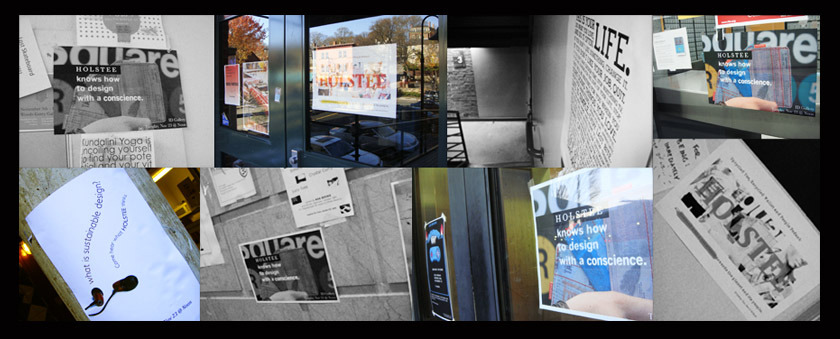
You have got to check out HOLSTEE! They design and curate with a conscience! Products from their online store include The Recycled Wallet, which is made of newspapers and plastic bags collected from the streets of India, and the People Pendant, which is made from acrylics scraps from a Chicago sign factory. 10% of Holstee’s proceeds go Kiva, a micro-lending service that helps entrepreneurs in developing countries start their own venture. They visited RISD today to share their story of how they created a business that’s about doing good and inspiring other people to follow their dreams as well as what sustainable design means to them. 

Their post on this:http://www.blog.holstee.com/excited-to-be-sharing-the-holstee-story-with

A Critique of the Life Cycle Assessment

[10/24/10]

Swsustainability_lca

This was a response paper I wrote for a class, so forgive the essay-ness of the format.


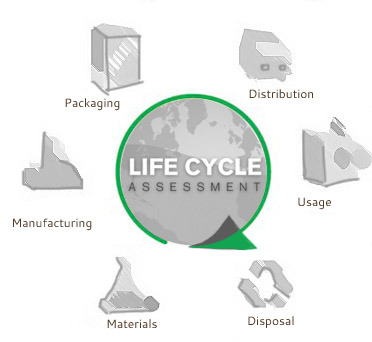
 The LCA is a useful tool for companies who want to move beyond simply complying with industry standards and find ways to reduce their products’ impact on the environment. It can be difficult to find accurate data at times enable to conduct the LCA, but it’s honest. Whether it’s making a difference is another story. The Scientific Applications International Corporation (SAIC) states specifically that the “life cycle assessment is a ‘cradle-to-grave’ approach for assessing industrial systems. ‘Cradle-to-grave’ begins with the gathering of raw materials from the earth to create the product and ends at the point when all materials are returned to the earth” (1). Although the SAIC touches on the recycling and reuse of material, expressing the assessment as a “cradle-to-grave” approach makes it more difficult to make the leap to “cradle-to-cradle.” 


Because analysts to can use the LCA to “compare the health and ecological impacts between two or more rival products/processes or identify the impacts of a specific product or process” (3), this approach is still mainly working within the existing system of product manufacturing. The database of materials and processes are limited to what is currently being used rather than necessarily what could be used. For example, to lower the eco-toxicity of a flashlight, one could change the material from primary aluminum to recycled or secondary aluminum. Even if the other materials and processes remain the same, the company can still say that are helping the environment. All this is does is change the “bad” into the “less bad.” 


What if the LCA did not only focus on the negative impacts of the product to the environment, but also on the positive impacts? Currently, if trim/scrap from the manufacturing process is reused, “they are considered ‘home scrap,’ which is part of an internal recycling loop. These materials are not included in the inventory analysis, because they do not cross the boundaries of the subsystem” (22). Because they’re not included in the in the inventory, this does not move the product’s impact towards a positive or negative direction. If products of consumption created excess trim that was beneficial for the environment, there would be no way to gauge its positive impact within the current LCA format. 


When a business is trying to advocate for sustainability, they want to be able to use the LCA to determine how much environmental impact their products cause. The LCA is a great way to understand how in need one’s product may be of a redesign. Yet, the LCA may propel the thinking that reduction along with reuse and recycling, is the only way to go; it’s an assessment that’s specifically about the cradle-to-grave procedure, allows people to work only with what data that is available for materials and processes, and expresses impacts in only negative terms. Instead of operating under this system of scarcity, we need reinvention and restructurization of what materials should be used and how they should be processed to create goods. Hence, it’s ultimately “less bad,” and not enough.


 1. United States: Office of Research and Development, U.S. Environmental Protection Agency. Life Cycle Assessment: Principles and Practice. Cincinnati: Scientific Applications International Corporation, 2006.


“I could never eat shrimps with heads”

[2/5/10]

Shrimp_gamba_nature_279947_l

(photo from imageafter)


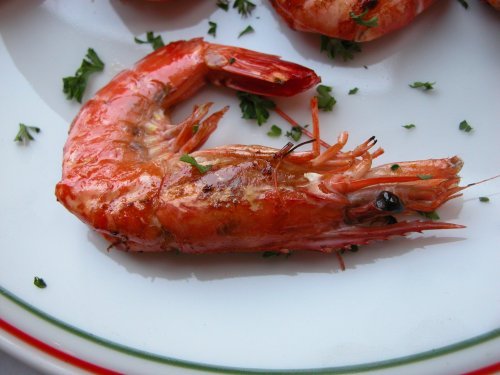
I learned recently that my friends aren’t really down with the idea of eating shrimp still attached with their heads. Well, I know it’s never fun to look into the eyes of a dead thing while you’re munching on it, but I felt I received an over-reaction at my comment that I don’t eating shrimp whole.


Yes, this is the girl whose favorite food as a child was fish eyes, but give me a chance here.

The problem is that everything is so processed where I live now that people can’t attach middle to beginning. I’m calling it disconnection to source.


I’m used to eating as in a lot of people sitting at a circular table participating in a very active event. If I may, I will use my grandfather as an example. The majority of what my grandfather eats on a daily basis involves an additional process before it’s gulped down. That means peeling, cracking – you name it – parts of the food to eat it.


I lived like that too at one point. I’m positive my one-year-old self was better at spitting out fish bones than I am now. But it was because I had a need to do it. Nothing was done for me.


We all know how the story goes here. Everything – everything – is de-boned, de-scaled, be-headed and de-gutted. So perhaps my issue with this disassociation to where things come from is just cultural. Is it?


For me, it’s not about the shrimp. It’s that we forget where things come from and we forget where things go. It’s like seeing only yellow-green instead of the entire spectrum. How many of us take food that’s handed to us and swallow it all at once, not cherishing it or thinking about how difficult and how long the process was of obtaining it in the first place. How many people are aware that half the foods they eat during spring are out of season?


When I was little, I was told that I couldn’t waste a single grain of rice on my dinner bowl, because rice farmers had spent all day every day toiling in the sun to produce it for me. Someone else had to suffer so I could have something precious.

Sure, much of what I eat now is grown by farmers using efficient machines, but for many places on the planet, my old philosophy still holds. Understanding the most vital ingredient for sustaining life still matters.


I still love my friends. They can hate eating shrimp with their attached heads. I’ll carry on eating my seaweed, octopus and eel.